

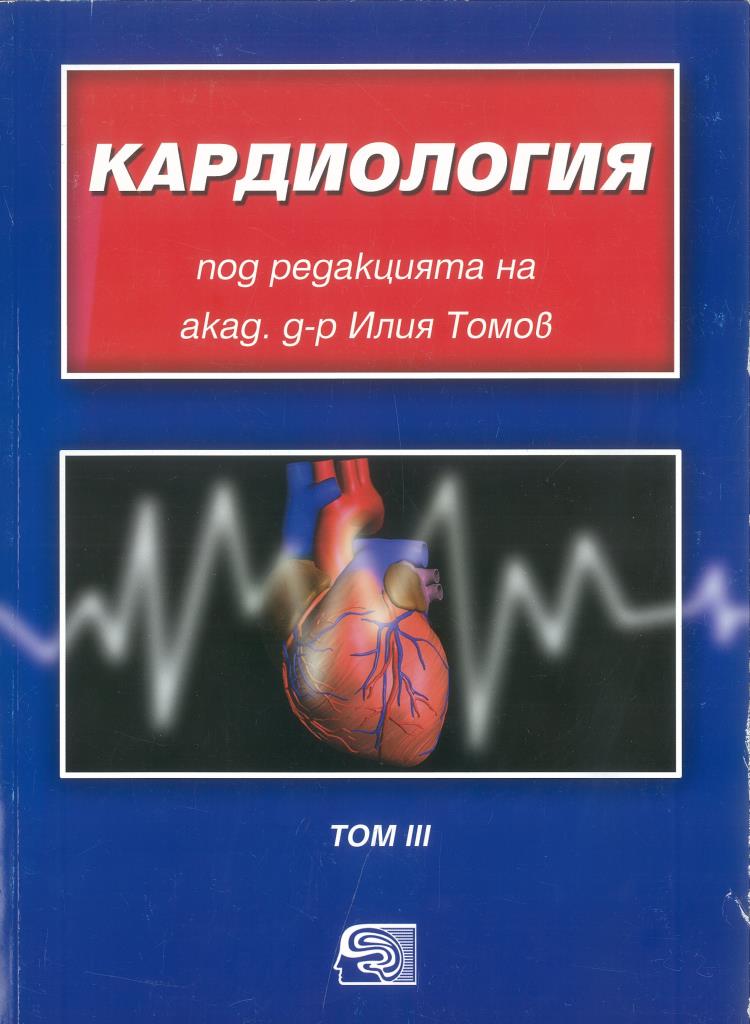
Cardiology Volume III
47.24 €
ISBN: 9789546212283
Publisher: Knowledge
Released: 2007
Number of pages: 832
Cover: Paperback
Language: Bulgarian
Dimensions: 21.00×28.50
The structure of the proposed book is traditional and corresponds to a clinical manual with a practical focus. It includes two volumes.
For many years, the authors participating in this book have carried out and are carrying out systematic methodological guidance to colleagues from the cardiology and internal medicine departments of district hospitals throughout the country.
Out of stock
Cardiology
The significant progress in the diagnosis and treatment of cardiovascular diseases over the last 10 years has provided grounds for a book to be published in our country, which, together with the classics, presents the essential and practically applicable achievements of modern cardiology.
The structure of the proposed book "„Cardiology“" is traditional and corresponds to a clinical guideline with a practical focus.
The first volume, "General Part - Diagnostic Methods and Main Clinical Syndromes", examines the functions of the heart in normal and pathological conditions, history, physical examination and clinical symptomatology, non-invasive examination methods - clinical electrocardiography, phonocardiography and sound findings, pulse recordings, thoracic and cardioradiography, echocardiography with all modern variants, ECG tests with physical exertion, radionuclide cardiodiagnostics.
Then, the clinic, diagnosis and treatment of the main clinical syndromes in cardiology are examined in detail - heart failure, chronic and acute (cardiogenic shock, acute cardiogenic pulmonary edema), heart rhythm disturbances (tachyarrhythmias and bradyarrhythmias), antiarrhythmic medications, proarrhythmia.
The second volume of the Cardiology manual includes: arterial hypertension, endothelial function in normal and pathological conditions (endothelial dysfunction), atherosclerosis and atherogenic dyslipidemias, risks for coronary heart disease, chronic and acute ischemic heart disease - stable angina, silent myocardial ischemia, unstable angina, acute myocardial infarction without elevation of the 5T-segment, acute myocardial infarction with elevation of the 3T-segment, complications of acute myocardial infarction, assessment of prognosis after acute myocardial infarction, prophylaxis (primary and secondary) of ischemic heart disease. The last chapter is dedicated to sudden cardiac death.
The author team includes long-time collaborators of the National Center for Cardiovascular Diseases, now the National Specialized Cardiology Hospital (NSCH), who have extensive clinical experience and modern knowledge in the field of clinical cardiology, modern instrumental diagnostic and therapeutic knowledge and experience, technical instrumental skills, preoperative diagnostics and indications for cardiosurgical treatment, participation in postoperative follow-up of patients with valve prosthesis, operative or instrumental (RTCA, stenting), coronary revascularization, pacemaker therapy, interventional catheter ablation therapeutic arrhythmology, etc.
The authors of this manual have extensive teaching experience with cardiology specialists and have participated in the training of groups of students in the last medical courses. In addition, for many years they have carried out systematic, high-level research work of a clinically applied nature in the field of cardiology and the implementation of new, of significant value, instrumental invasive and non-invasive methods of examination, diagnosis, treatment and prevention of cardiovascular diseases.
| Origin | Bulgarian |
|---|
Related products


Obstetrics
