

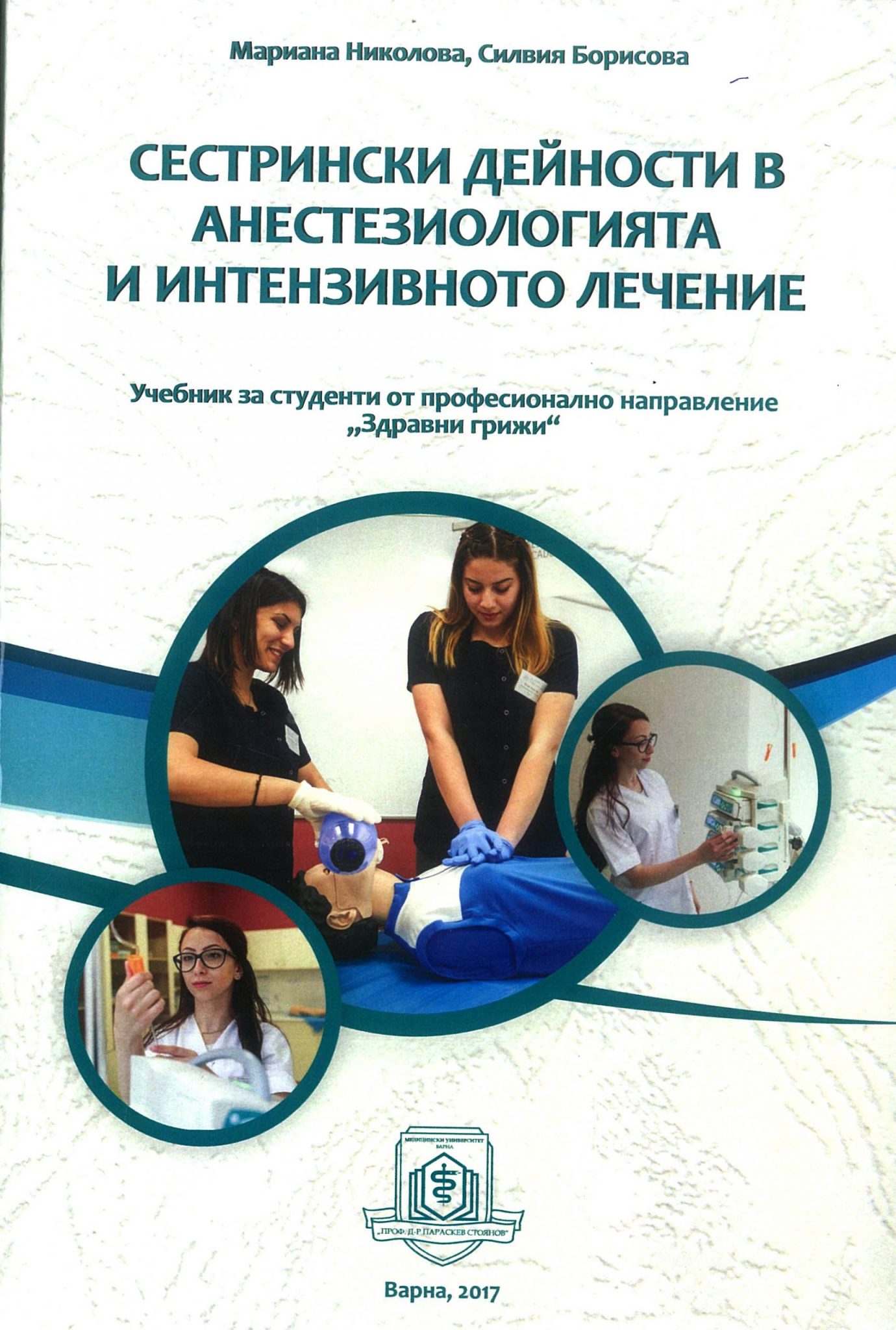
Nursing Activities in Anesthesiology and Intensive Care: Textbook for Students of the Professional Field of "Health Care"
16.00 €
-
Year of release: 2017
-
Publisher: Varna
-
ISBN:978-619-221-040-3
-
Number of pages: 201
-
Language: Bulgarian
-
Cover: Paperback
In stock (can be backordered)
Nursing activities, anesthesiology and intensive care.
Nursing Activities in Anesthesiology and Intensive Care: Textbook for Students of the Professional Field of "Health Care"
The textbook is intended for students of the professional field of "Healthcare".
The textbook "Nursing Activities in Anesthesiology and Intensive Care" presents content consistent with modern standards in anesthesiology and intensive care. It supports the development of specific skills and behavior in preparation for anesthesia, control of vital functions during surgery, as well as resuscitation and intensive therapy of operated or conservatively treated patients.
Nursing Activities in Anesthesiology and Intensive Care: Textbook for Students of the Professional Field of "Health Care"
Nursing activities, anesthesiology and intensive care.
I. Medical specialty "Anesthesiology and intensive treatment
Anesthesiology and Intensive Care" is a major medical specialty that includes the study and practical implementation of the clinical activities "Anesthesia", "Cardiopulmonary resuscitation" and "Intensive care". 1. "Anesthesia" is the application of medicinal products (anesthetics) and techniques (anesthetic techniques) to induce a state of anesthesia and subsequent recovery from anesthesia.
2. "Cardiopulmonary resuscitation" is a complex of diagnostic and therapeutic activities to restore suspended basic vital functions (cardiac activity, respiration, central nervous system functions) in patients in a state of clinical death.
3. "Intensive treatment" is a specific diagnostic and treatment process for patients with critical disorders in vital functions and/or for whom it is expected that these functions may decompensate in the immediate future.
II. Anesthesia
A. Basic principles of anesthesia
1. Each anesthesia and each patient includes the following mandatory stages:
1.1. clinical examination and preparation of a patient for anesthesia;
1.2. induction of anesthesia;
1.3. maintenance of anesthesia;
1.4. recovery from anesthesia.
2. For each anesthesia and for each patient, a specific diagnostic and treatment process is carried out, which includes or may require the inclusion of:
2.1. monitoring during anesthesia;
2.2. intensive care during anesthesia;
2.3. cardiopulmonary resuscitation during anesthesia.
3. Anesthesia shall not be performed without the availability of material, organizational and personnel conditions for adequate clinical examination and preparation of a patient for anesthesia, induction of anesthesia, maintenance of anesthesia, recovery from anesthesia, monitoring during anesthesia, intensive care during anesthesia and cardiopulmonary resuscitation during anesthesia.
4. Each anesthesia must be performed based on the principles of the medical specialty "Anesthesiology and Intensive Care" for safety and adequacy:
4.1. safe anesthesia – does not in itself increase morbidity and mortality and, apart from temporary and reversible side effects, does not impair the health of patients;
4.2. adequate anesthesia - provides optimal conditions for performing a surgical intervention or other diagnostic or therapeutic procedure;
4.3. the principle of anesthesia safety is a priority in all patients and clinical situations.
B. Basic activities during anesthesia
1. Clinical examination and preparation of a patient for anesthesia
1.1. "Clinical examination and preparation of a patient for anesthesia" is a specific diagnostic and treatment process performed prior to anesthesia in order to plan and provide anesthesia that is safe and adequate to the patient's condition and the needs of the surgical intervention or other therapeutic or diagnostic procedure.
| Origin | Bulgarian |
|---|
Related products


Anatomy
Sinelnikov - Atlas of Human Anatomy - Volume 2 (Learning about internal organs and endocrine glands)


